Consultant Peter Drucker, credited as the man who invented modern management, once wrote that “the most common source of mistakes in management decisions is the emphasis on finding the right answer rather than the right question.” That is also true of the process of bringing high-stakes products and technologies to market.
Product development carries uncertainty at every step. While today’s advanced simulation can speed the process of testing and refining products, it can also hinder developers looking in the wrong place for answers to their challenges.
To effectively speed product development and engineering, it can help to bring in outside specialists who carry deep expertise in areas beyond in-house capabilities. Having access to the right blend of specialized expertise can ensure you’re asking the right questions and using the right tools to solve challenges in the development process – accelerating decision-making and getting better products to market faster. This added insight can deliver value at every stage of product development.
The Value of Bringing in Specialized Expertise
Having the right expertise on a product development team is essential for guiding decision-making at critical points of the development process. Though many product development teams comprise multidisciplinary talent capable of working across material and process types, they potentially lack the specific insight needed to navigate certain obstacles.
Cross-functional teams don’t always recognize their own blind spots. In many cases, these areas of weakness can result in material or manufacturing process problems that are not visible until the product has moved downstream, where it becomes more costly and time-consuming to correct.
Product development teams also risk getting locked into “tunnel vision,” unable to look beyond expectations for product performance to see potential problems. It’s not uncommon for groups to feel that it’s up to the team to solve challenges on their own. Yet even a little bit of time with a specialist can save a lot of time for a team that may be working based on a gut feeling about what to do.
The right consulting partners will bring an outside perspective to help identify why a problem might be occurring. This might mean asking questions to move product development and engineering teams to consider previously missed factors or to think beyond preconceived notions about the preferred solution.
What’s more, the right expert will strive to serve as an extension of an organization’s product development team. This proved to be the case for General Fusion. The organization is working to bring fusion energy to the commercial power grid using Magnetized Target Fusion (MTF). The technology injects magnetized plasma into a cavity and rapidly squeezes it using a rotationally stabilized liquid metal liner. When the company’s engineers set out to develop a large-scale MTF demonstration machine, called Lawson Machine 26 (LM26), they brought Veryst in to accelerate design development and enable successful prototypes.
Veryst team members worked on-site at General Fusion’s headquarters to develop and execute a test plan to extract high-quality data for material modeling. According to Jean-Sebastien Dick, an engineering analysis manager at General Fusion, “Veryst quickly understood the multiphysics nature of the liner compression in our LM26 machine. They assembled a team of subject matter experts to propose a well-defined numerical and experimental strategy. Veryst integrated with our team to execute on this plan, helping us to accurately predict the loads on our structure.” Bringing this expertise onto the development team allowed the company to meet its aggressive timeline.
Specialized Expertise Can Close Gaps in Product Development and Engineering
Consultants who hold specialized expertise can also help ensure the right experiment or simulation is used to better understand and reduce product risk. By bringing fresh expertise, a consultant can expand the range of potential solutions available to a product development team – often across the entire product development cycle.
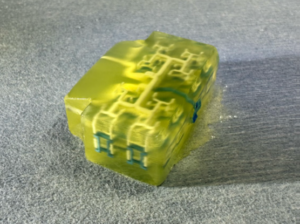 For example, as 3D BioLabs, LLC worked to develop a scalable platform technology to address the human donor organ shortage, they knew they needed a partner who could deliver specialized expertise across a range of areas. 3D BioLabs partnered with Veryst for insight that spanned fluid mechanics, 3D printed materials, and materials testing to help them make more informed decisions faster.
Veryst first worked with 3D BioLabs to ensure 3D printing reliability for their desired biomaterial inks, then developed the initial two-channel prototypes that enabled the 3D BioLabs team to refine their surgical implantation protocol. Next, Veryst characterized biomaterial properties and simulated mechanical loads, ensuring the devices made from the printed biomaterials could withstand handling and use.
As development progressed, Veryst built a design paradigm for intricate internal channel networks to promote uniform blood or culture media distribution. Using advanced Computational Fluid Dynamics (CFD) simulations, the team optimized junctions, ports, and plumbing to ensure the technology would maintain physiological wall shear stresses to support blood health.
Over successive iterations, the device advanced, incorporating complex, fractal-like networks with multiple bifurcations. These structures were designed to support superior nutrient and waste exchange across larger tissue volumes. Veryst automated CAD generation to accelerate design cycles and ensure accuracy, updating the designs based on our consultant’s expertise, while 3D BioLabs successfully printed and tested each new device iteration.
4 Development Stages Where Outside Expertise Can Change the Course
Specialized expertise can deliver value at every stage of product development, from developing the initial concept through testing, failure analysis, and development of product improvements.
1. Concept stage
Bringing outside expertise onto a project in the concept phase can accelerate decision-making when it comes to evaluating the feasibility of the current approach. This is invaluable in helping companies determine if they will be better served by taking a new development approach or freeing resources now to move on to the next big idea.
It can also prove valuable to bring in outside expertise early in the product development cycle in order to create a simple model and then build in complexity as development progresses. These early stages of product development are often about narrowing down the possibilities to make a solution work, rather than defining an exact answer. By starting with a simple model, teams can quickly get the design guidance they need to effectively make such early decisions. Then, as product design and development matures and teams gain deeper understanding into design, material, and process needs, new levels of complexity can be added to the model to extend and refine predictions and guidance.
2. Improving Product Performance
O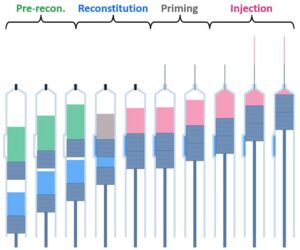 utside expertise can help to better understand the performance of products moving from prototype to mass commercialization. This was the reason a pharmaceutical manufacturer brought Veryst experts in to develop a physics-based mathematical model for understanding and optimizing the behavior of autoinjectors with dual-chamber cartridges (AIDCs).
The model provided estimates for some of the essential performance requirements needed to yield good device performance, including injection time, stopper trajectories, and the maximum diluent volume.
This specialized expertise can prove particularly useful as variations, not seen during early prototypes, begin to emerge as production accelerates. It can be tough for teams immersed in product development to work backwards and pinpoint an overlooked source of inconsistency. An outside consultant can bring in specialized expertise to finetune the product design or manufacturing process to ensure more reliable performance.
3. Product failure
A failure once a product emerges on the market can be devastating. A consultant can bring in the outside perspective needed to identify what may have gone wrong and when. A failure analysis, potentially in combination with focused, advanced test plans and simulations, can quickly characterize potential issues with material loading or manufacturing processes, among other factors.
More importantly, this added expertise can help accelerate finding a resolution. Expanding the number of backgrounds and perspectives of the team working on the problem can help build a larger pool of potential areas to investigate, and expand the pool of potential solutions.
4. Next-generation product development
Once an organization gets a product to market, there’s often pressure to develop and release the next iteration. Product development and engineering teams may work toward better performance, new features, or improved manufacturing processes that lead to a more cost-effective, competitive product. During this product improvement phase, organizations may look at material, design, or operating procedure changes – changes that can lead to new problems.
Even a minor material or process change can alter a product’s physical, chemical, or mechanical properties. Seemingly negligible adjustments can impact how a system behaves downstream, leading to unexpected behavior that can contribute to total system failure. An outside consultant can offer the expertise needed to identify how small changes may disrupt design features and performance.
In one case, our experts worked with an organization that had made a number of improvements to its flagship product and suddenly saw performance decrease. The product development team couldn’t pinpoint the problem. Our experts were able to take a two-prong approach to the investigation, looking into both materials and the manufacturing processes to identify the cause of failure. The source of the problems turned out to be a fluid mechanics issue that was creating a ripple effect, leading to performance changes downstream. Once the problem was identified, the development team held a stronger understanding of how to improve manufacturing, and ultimately, product performance.
Early Insight Delivers Bigger Savings
The sooner design, material, and manufacturing issues are identified, the more time and money organizations can save in redesign and tracking down problems. In this way, bringing outside expertise onto a project early can prove particularly valuable.
Biora Therapeutics recognized this value. The company is developing a swallowable smart capsule that uses needle-free liquid jet injection to precisely deliver large-molecule drugs to the intestinal mucosa. Biora brought Veryst’s experts onboard in the concept stage to simulate and optimize device activation, jet formation, and injection performance. This early involvement accelerated design cycles, reduced development risks, and shortened the path to clinical trials.
To this end, Veryst first created and validated rapid design tools based on fundamental jet nozzle and fluid mechanics theory, streamlining Biora’s engineering decisions. Then, Veryst built a detailed finite element model to simulate activation of the device and the fluid pressure that forms and drives the jets. These early modeling efforts enabled the Veryst and Biora teams to predict how design changes would impact the formation and force of the jets, which are critical performance indicators of the system.
Complex Products, Complex Problems: Outside Expertise Can Simplify Solutions
At every stage of product development, there is a benefit to taking a moment to ask if the team in the room holds all of the essential specialized knowledge that will be needed on the product development journey. It’s particularly important to pause to consider this when development is moving fast. Problems baked into designs and processes early on may not become obvious until later. Bringing an outside consultant into the process during the concept stage can save significant time and money in the long run. Targeted expertise review can often resolve uncertainty faster than another round of physical prototyping.
Mistakes can be costly. Reaching out to an expert doesn’t have to be. Veryst offers free consultation calls. Reach out for a scoping conversation before a tooling or go/no-go decision is locked in, rather than after a failure has already occurred.