Multiphysics Simulation of Reconstitution of Freeze-Dried Drug Product
Technical Challenge
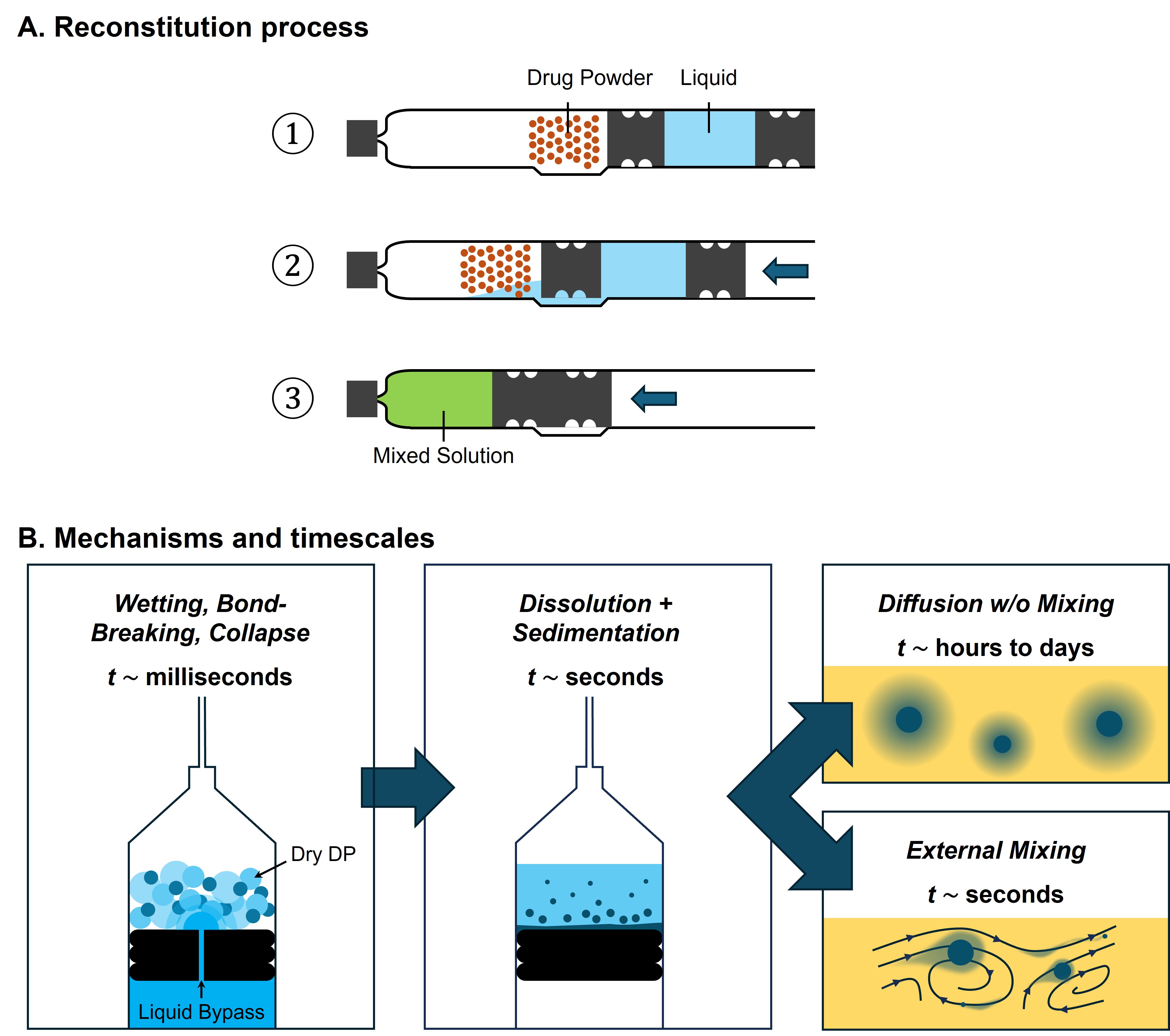
Freeze-dried (lyophilized) drug products extend shelf life and ensure drug stability for combination products such as autoinjectors and pre-filled syringes. Before injection, the freeze-dried drug product (DP) must be reconstituted quickly and completely: diluent flows into a mixing chamber and dissolves the DP (Figures 1 and 2A). Efficient reconstitution is vital for dose accuracy, therapeutic effectiveness, patient safety, and user convenience.
DP dissolution can be rate-limiting, especially when active mixing is needed to achieve a uniform solution (Figure 2B). This case study focuses on simulating dissolution kinetics and how they depend on diluent volume, DP concentration, solution viscosity, and DP particle size distribution.
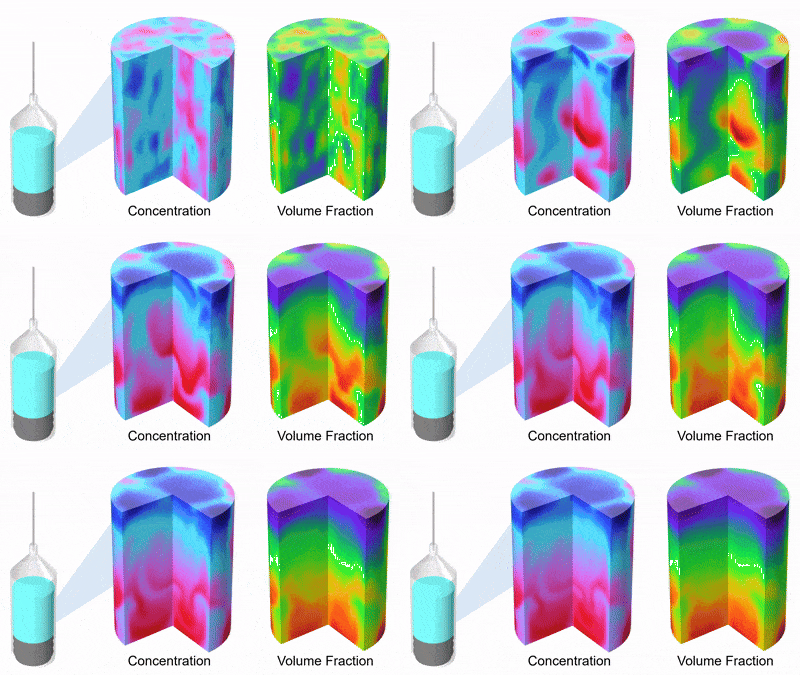
Veryst Solution
Veryst used multiphysics simulation to model the DP dissolution process, employing laminar flow and species transport physics to model dissolved DP distribution. The evolution of DP particle size was captured using a custom Population Balance Equation, where dissolving particles acted as sources within the species transport framework. Model inputs included initial DP particle size distribution, total DP mass, and diluent viscosity and volume.
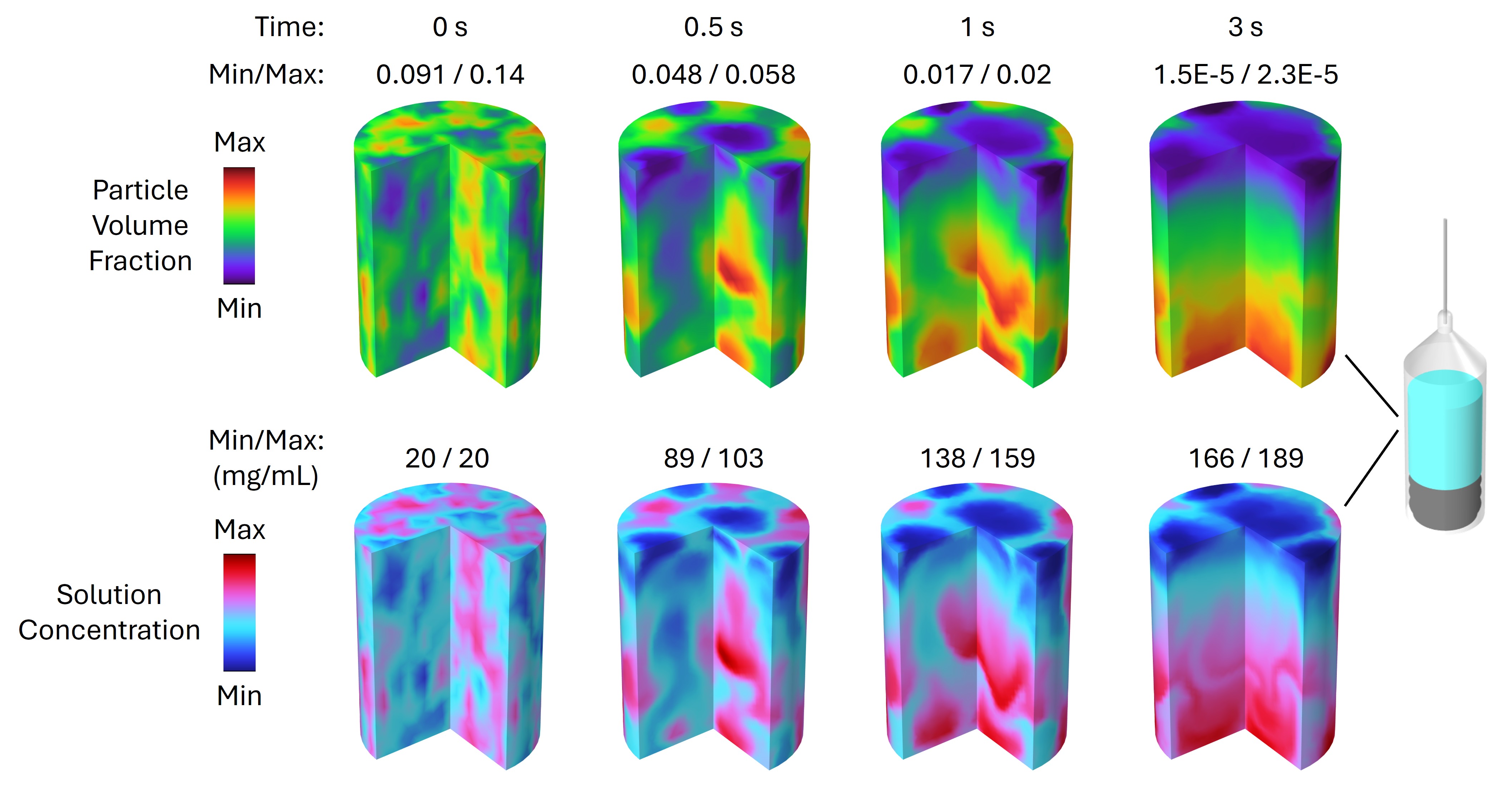
As DP particles dissolve, their size distribution shifts to smaller diameters and broadens, while solution concentration rises (Figures 3 and 4). Gravity-driven particle sedimentation induces a vertical concentration gradient (Figure 4). Consequently, active mixing is typically needed to achieve rapid and homogeneous reconstitution.
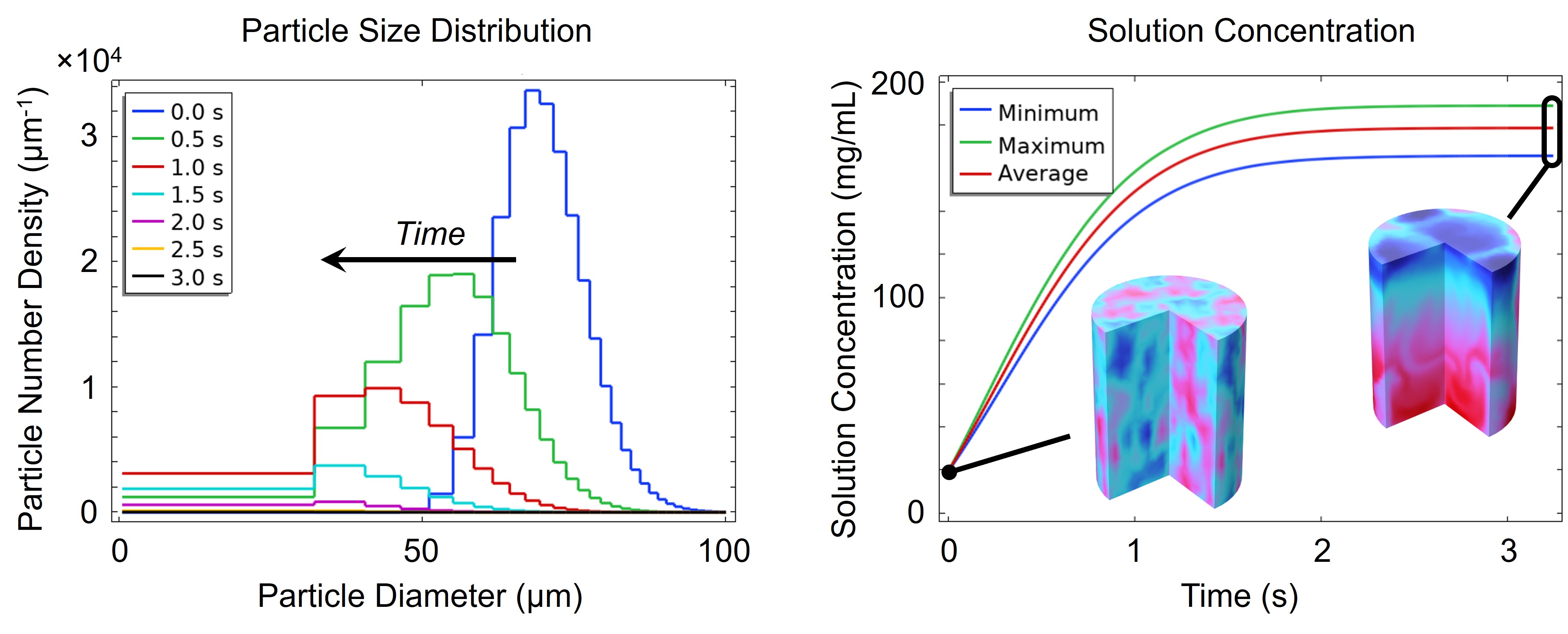
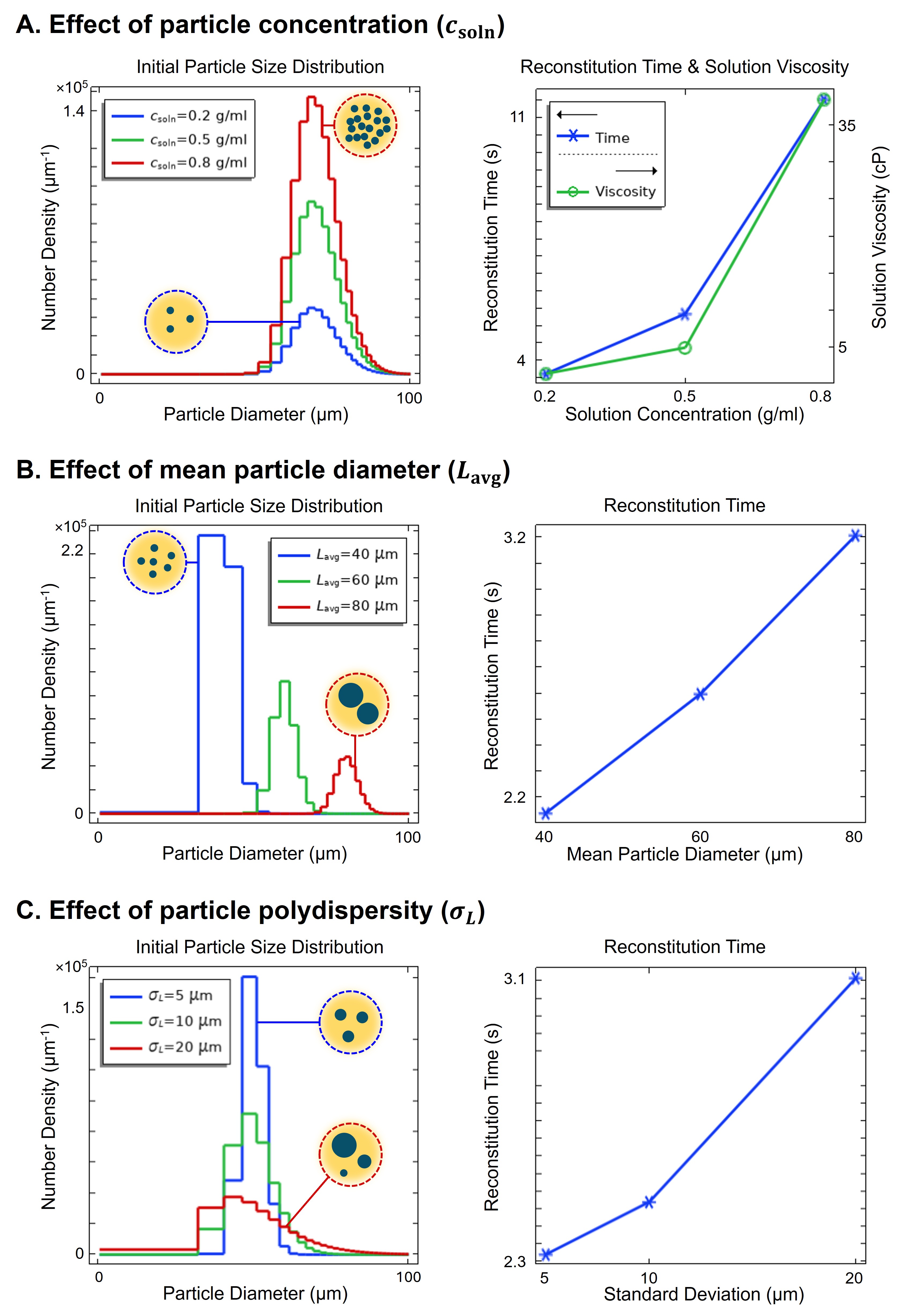
Parametric analysis (Figure 5) highlights key insights: higher DP particle concentrations increase solution viscosity and extend reconstitution times (Figure 5A); larger mean particle size slows dissolution (Figure 5B); and increased polydispersity further delays reconstitution as larger particles dissolve more slowly (Figure 5C).
Conclusion
Veryst used CFD simulations to visualize the complex, transient, coupled flow and particle dissolution in freeze-dried drug product reconstitution. This is hard to observe experimentally, because combination products are often self-contained and reconstitution happens quickly.
Simulations like these let teams evaluate alternate designs, operating protocols, formulations, and material and fluid properties quickly, expediting autoinjector and formulation development and helping ensure rapid, effective reconstitution and reliable combination product performance.
Related: try our free dual chamber autoinjector and prefilled syringe modeling apps, or read how we predict clogging for dense suspensions in syringe needles.