Case Studies

Modeling a MEMS LiDAR Mirror

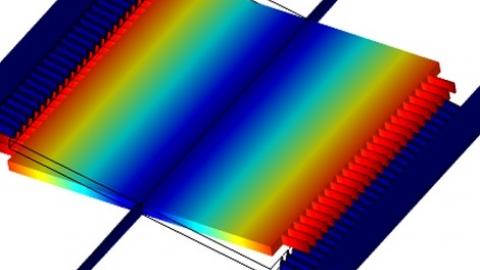
MEMS mirrors raster the laser beam in many next-generation LiDAR system designs. Constructing a finite element model of a MEMS mirror is challenging, as it is difficult to represent the large number of comb fingers in the comb drives that actuate these devices. Veryst addressed this problem by using mixed analytic and finite element approaches to construct accurate finite element models.

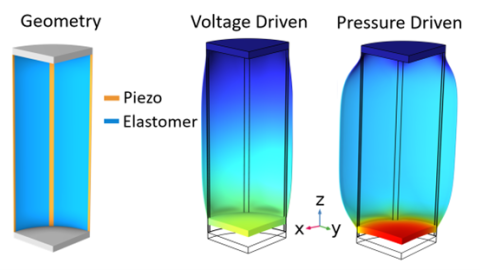
Modeling of Piezoelectrically Enhanced Soft Artificial Muscles

Piezoelectric soft artificial muscles provide actuation in robotics, medical devices, and wearable technologies. Their high power-to-weight ratios make them ideally suited for such applications. However, the coupled nonlinear relationship between their geometry, material response, and performance poses a challenge for their design. Simulating the performance of artificial muscle devices enables rapid concept testing, design iteration, and material selection.

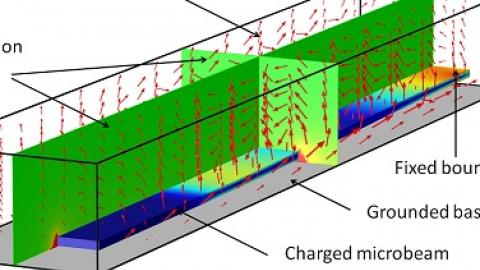
Multiphysics Analysis of a MEMS Switch

The responses of a MEMS switch immersed in fluids differs from that in a vacuum. Veryst Engineering developed a coupled electrostatic-fluid-structure interaction model to investigate the switch response time, deformation, and energy dissipation.

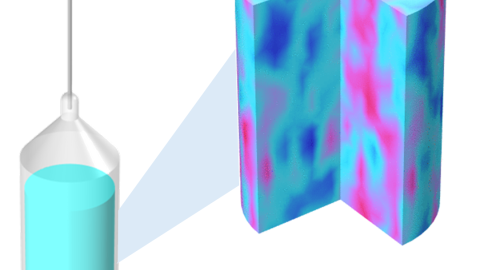
Multiphysics Simulation of Reconstitution of Freeze-Dried Drug Product

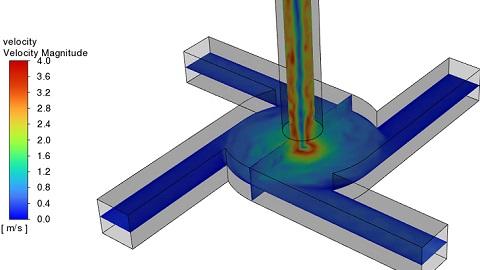
Reconstituting freeze-dried drug products in autoinjectors requires rapid and uniform dissolution to ensure accurate dosing and patient safety. Veryst used multiphysics simulation to model the mixing and dissolution process, revealing how factors like particle size, concentration, and viscosity impact reconstitution speed—guiding the optimization of the device, formulation, and operating protocols.

Optimizing Intravitreal Drug Delivery with Multiphysics Simulation

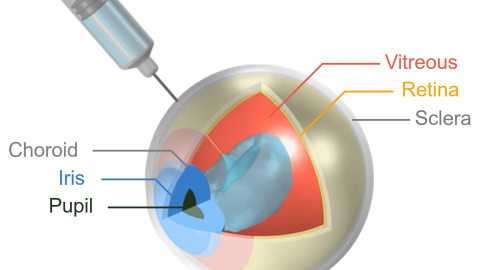
A cornerstone for ophthalmic therapy, intravitreal injection must overcome unique challenges: ensuring patient comfort, safeguarding delicate retinal tissues, and delivering medication accurately to specific intraocular targets. Key design metrics—including injectate volume, dispersion, injection force, needle gauge, and intraocular pressure rise—must be precisely optimized. In this case study, Veryst leverages multiphysics CFD simulation to predict, manage, and enhance device safety and performance for innovative ocular drug delivery.
Optimizing Subcutaneous Drug Delivery with Multiphysics Simulation

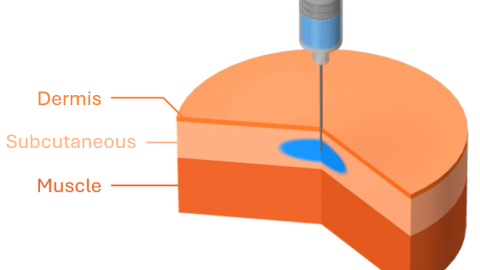
A leading route for targeted drug therapy, subcutaneous injection faces complex challenges: ensuring patient comfort, usability, convenience, and precise dose administration. Critical design factors—injectate volume, viscosity, needle size, and injection time—must be optimized. In this case study, Veryst leverages multiphysics CFD simulation to predict and enhance performance metrics for advanced combination product development.

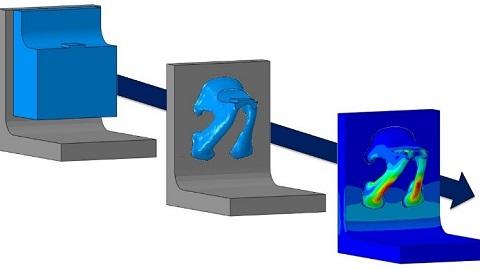
Osteotome Fracture

An osteotome unexpectedly failed during a plastic surgery operation. Veryst was hired to explain the failure.

Oxygen Transport and Cellular Uptake in a Microchannel

Oxygen transport is a key factor in the design of cell culture systems such as organs-on-a-chip, microphysiological systems, and bioreactors. In this case study, we use multiphysics simulation to analyze oxygen transport and cellular uptake in a model microchannel bioreactor.

Can we help? Just want to keep in touch?