Case Studies

Chemical Carryover in Microfluidic Devices

Removing reagents or sample from a previous processing step via a wash cycle is a common challenge in microfluidic assays used in diagnostic, genomic, biomedical, pharmaceutical and other applications. This case study shows how finite element simulations may be used to predict and optimize wash cycle performance.
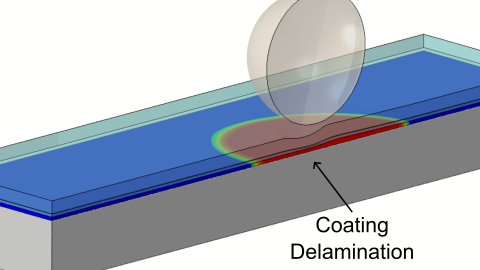
Coating Delamination Due to Particle Impact

High-velocity particle impact can cause delamination of protective coatings, which limits the life of components that require thermal or environmental protection. Veryst used finite element analysis (FEA) to model particle impact and assess the influence of impact parameters on coating delamination.

Cohesive Zone Model (CZM) Calibration

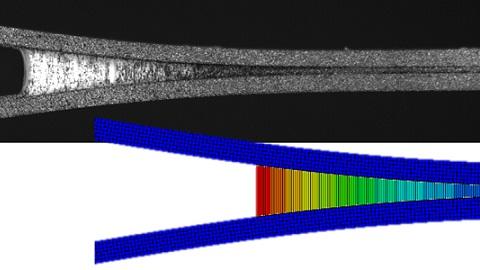
Cohesive zone modeling is a powerful tool for predicting delamination in adhesively bonded structures. Veryst engineers use their expertise in experimental and computational fracture mechanics to calibrate cohesive zone models for accurate prediction of adhesive failure.

Composite Testing

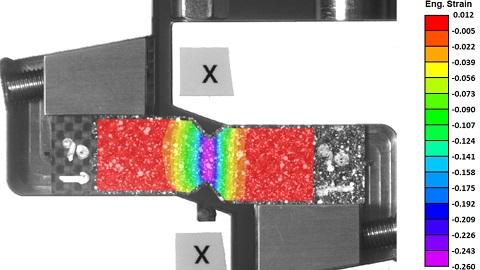
Composite materials, such as carbon fiber reinforced polymers, provide a high strength-to-weight ratio for structures ranging from aerospace components to biomedical implants to consumer sports products. These materials require thorough and specialized methods for material testing and validation due to their anisotropic material properties.

Concentration Gradients in Microfluidic Devices

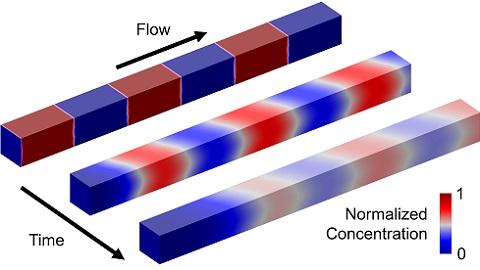
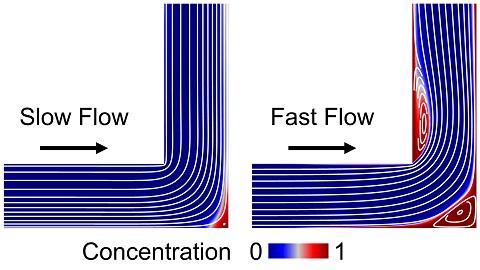
Controlling spatial variations in chemical concentration is important for designing and operating many microfluidic devices across a wide range of industries and applications including diagnostics, genomics, and pharmaceutics. In this case study, we show how simulations may be used to quantify and control concentration gradients in microfluidic devices.

Cranial Perforators

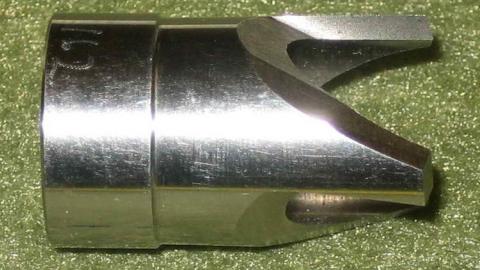
Medical devices, such as the cranial perforator here, show imperfections that are rejected by physicians. Veryst investigated the source of these imperfections and recommended steps to remove them.

Creep Testing of Polymers at Elevated Temperatures

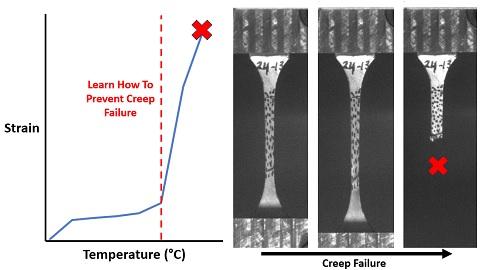
Polymers are prone to deform slowly over long periods of time when subjected to applied load, a phenomenon known as creep. Over time, the deformation can grow so large that the part no longer functions as intended. Veryst utilized creep testing to compare material choices and set temperature specifications for polymers.

Delamination in Microfluidic Valves

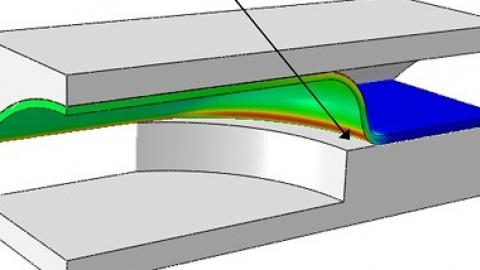
A commonly encountered failure mode in microfluidic devices is delamination between adjacent device layers. Veryst examined the influence of control channel geometry on the delamination pressure of a pneumatic microfluidic valve using finite element analysis.

Design and Simulation of a Catheter-Based Acoustic Ablation Device

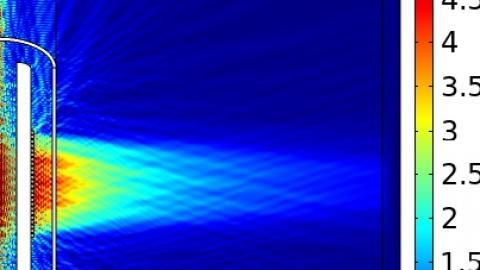
Thermal ablation is a minimally invasive way to treat tumors, and simulating the physics of ablation can help in the design of ablation devices. Veryst designed and simulated a catheter-based acoustic ablation device relying on acoustic pressure waves to heat tissue to induce necrosis.

Can we help? Just want to keep in touch?