Case Studies

Bubble Entrapment in Microchannels

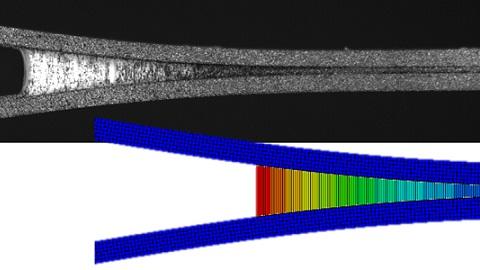
Bubbles trapped in microchannels can distort the fluid flow and impact the device performance. Veryst developed a multiphase CFD model to predict the effect of geometry and surface properties on the likelihood of bubble entrapment.

Calrod Thermal Analysis

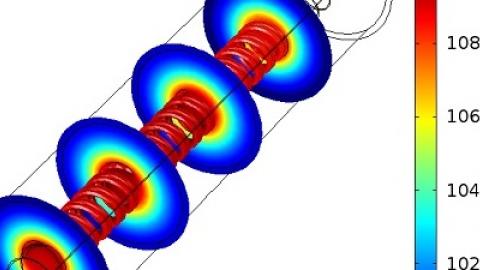
How fast does a Calrod heat up and how high are the stresses during heating? To answer these questions, Veryst Engineering developed a coupled electric-thermal-structural multiphysics model of the Calrod, accounting for conduction, convection, and radiation.

Capillary Filling in a Microfluidic Channel

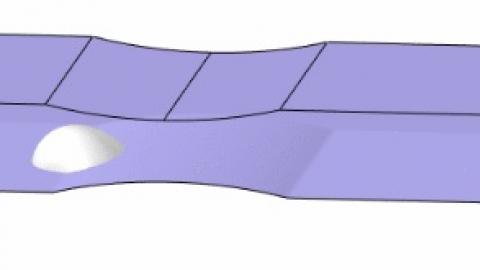
Capillary filling, the autonomous wicking of liquids through hydrophilic microchannels driven by surface tension and wettability, enables pump-free, precise fluid handling in microfluidic devices for the biotechnology, MedTech, semiconductor, and chemical processing fields. In this case study, we present advanced simulations of capillary filling and its dependence on wettability, quantified by the contact angle. Such simulations inform product and process design decisions to enhance efficiency, reliability, and scalability.
Cell Phone Drop Test

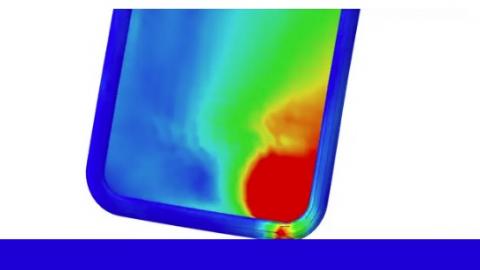
Biodegradable polymers are becoming increasingly attractive for consumer product applications such as electronic devices and disposable packaging. Modeling these materials during impact is challenging due to the complexity of the physical event and the scarcity of appropriate material models for biodegradable polymers.

CFD Modeling for a Hospital Room Ventilation System

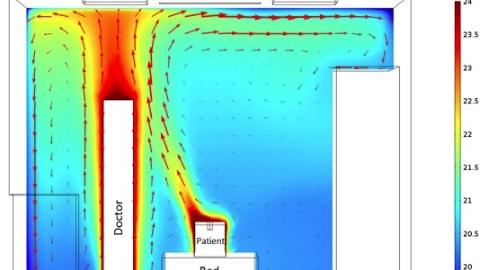
Efficient ventilation can reduce a building’s energy consumption and minimize airborne pathogen transmission in hospital rooms.  Veryst used computational fluid dynamics (CFD) to simulate ventilation in a hospital room as well as the dispersion of particles and droplets.

Chaotic Mixing in Microfluidic Devices

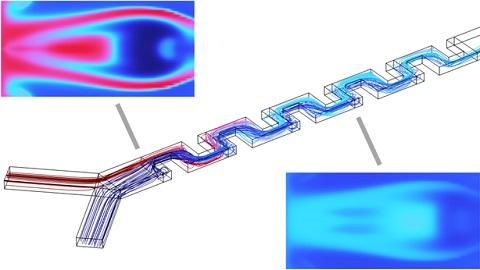
Fast mixing of reagents in microfluidic channels and devices is important for DNA sequencing, mRNA vaccine production in small-batch pharmaceutical processes, and point-of-care diagnostics. In this case study, Veryst used computational fluid dynamics simulations to evaluate the mixing performance of three commonly used microfluidic mixers.

Chemical Carryover in Microfluidic Devices

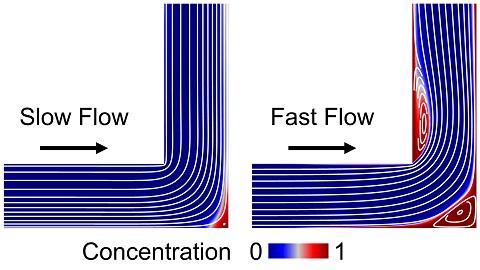
Removing reagents or sample from a previous processing step via a wash cycle is a common challenge in microfluidic assays used in diagnostic, genomic, biomedical, pharmaceutical and other applications. This case study shows how finite element simulations may be used to predict and optimize wash cycle performance.

Coating Delamination Due to Particle Impact

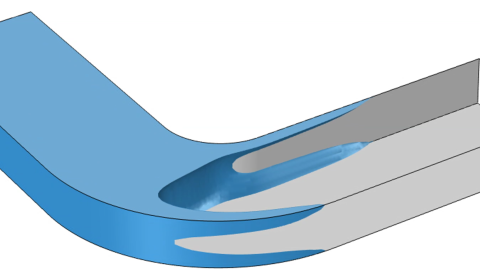
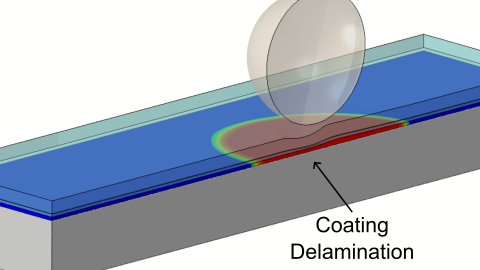
High-velocity particle impact can cause delamination of protective coatings, which limits the life of components that require thermal or environmental protection. Veryst used finite element analysis (FEA) to model particle impact and assess the influence of impact parameters on coating delamination.

Cohesive Zone Model (CZM) Calibration

Cohesive zone modeling is a powerful tool for predicting delamination in adhesively bonded structures. Veryst engineers use their expertise in experimental and computational fracture mechanics to calibrate cohesive zone models for accurate prediction of adhesive failure.

Can we help? Just want to keep in touch?