Case Studies

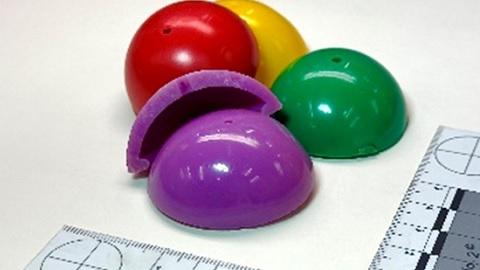
How a Pop-Up Rubber Toy Jumps – Analysis and Simulation

Pop-up rubber jumpers are fun toys that unexpectedly jump and pop when placed on a flat surface after they are inverted. The poppers are hemispherical rubber domes which can be easily inverted inside-out, a process that stores elastic energy in the rubber material. This case study showcases how simulation can effectively be used to unravel complex nonlinear phenomena such as the inversion and jump of a popper toy.

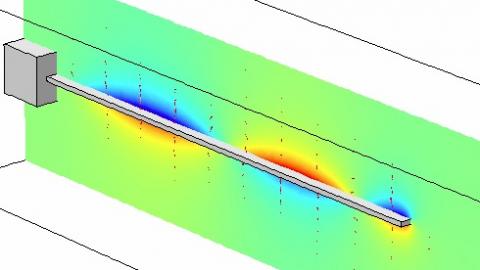
Immersed Beam Vibration

When a thin structure is immersed in a fluid, its natural frequencies, mode shapes, and damping characteristics may be significantly affected by the fluid. Predicting the dynamic behavior in this case requires a structural-acoustic analysis.

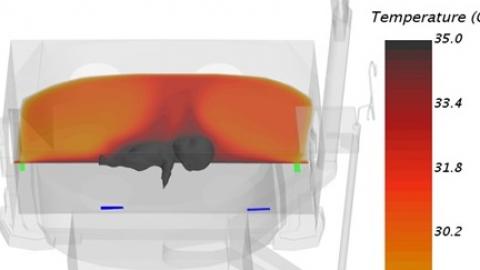
Infant Incubator Thermal Modeling

The main environmental factor affecting a premature neonate is thermo-neutrality, as the baby is incapable of regulating and maintaining his/her body temperature at a constant level. Veryst developed a computational model of heat transfer inside an infant incubator to optimize its design.

Insufflation Analysis

To compare the performance of two gas humidification devices, Veryst Engineering performed gas flow testing, device examination, and CFD analysis.

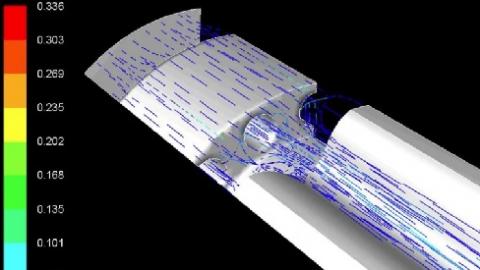
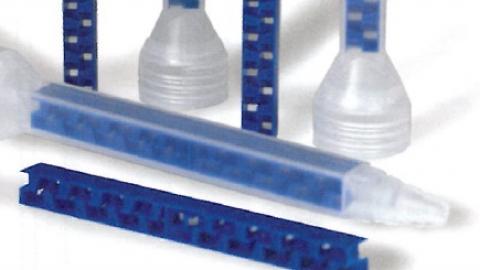
Laminar Static Mixer Analysis

Laminar static mixers are often employed in industrial environments when the mixing of two or more fluids is required. However, their performance is impossible to analyze with a pure CFD approach. Veryst, in collaboration with Nordson EFD, developed a unique computational modeling tool to evaluate and optimize the design of such mixers.
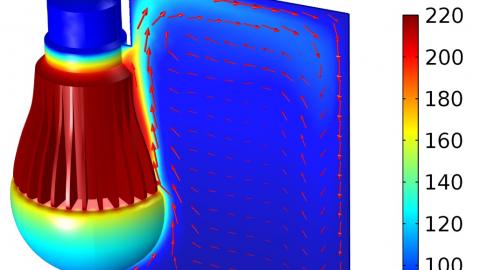
LED Light Bulb Heat Transfer Simulation

Both the efficiency and life of an LED bulb drop when operated at high temperature. Given the wide range of possible shapes and sizes of heat sinks, Veryst Engineering developed a rapid and effective tool to compare design alternatives and estimate LED temperatures.

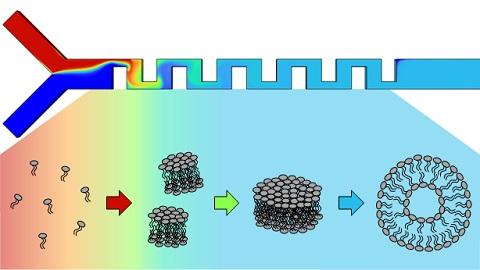
Lipid Nanoparticle Self-assembly for mRNA Vaccine Production

Controlling the size of lipid nanoparticles (LNPs) in small-batch pharmaceutical processes is critical for delivery efficiency in mRNA vaccines, cancer therapies, and point-of-care diagnostics. In this case study, Veryst simulated solvent mixing and LNP self-assembly kinetics in a microfluidic mixer to predict the size distribution of LNPs across a range of process flow conditions.

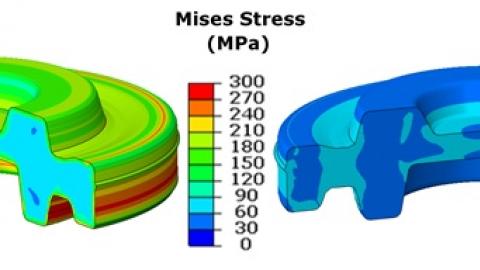
Material Models for Hot Forging Simulation

Hot forging simulations depend critically on the correct selection of metal material models. Veryst illustrates this dependence through a turbine disk forging simulation using both rate-dependent and rate-independent material models.

Can we help? Just want to keep in touch?