Veryst Engineering offers both online (web-based) and in-person (classroom-style) training classes. Our classes are focused primarily on two areas:
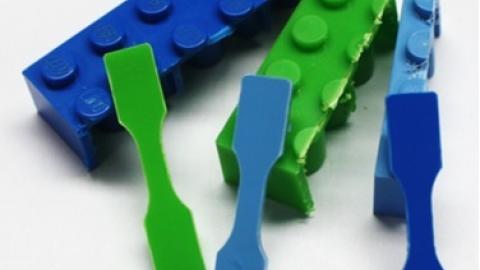
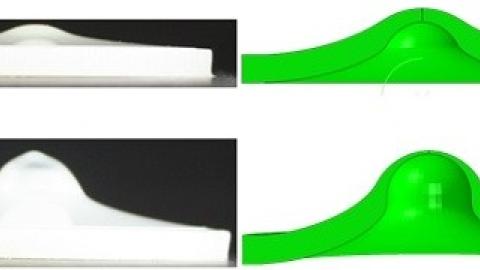
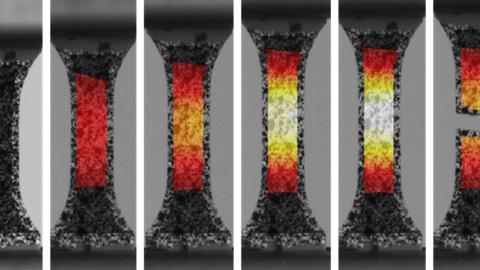
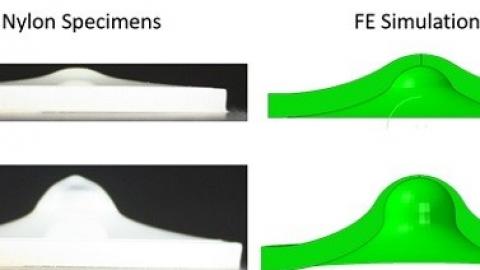
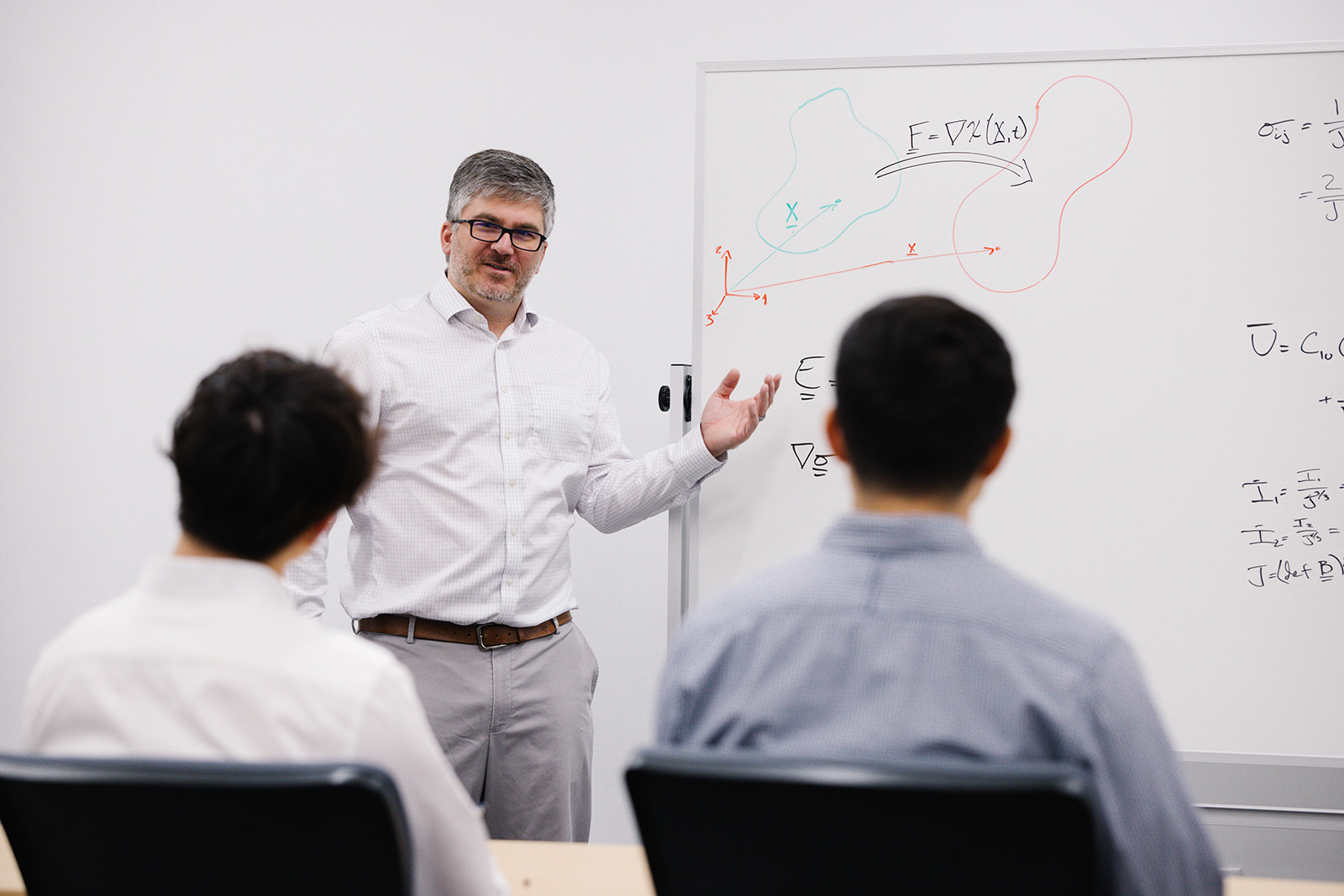
Veryst offers a variety of classes on polymer mechanics, experimental testing, material model selection and calibration, and advanced finite element modeling techniques. These training classes are targeted to people with an interest in learning the state of the art in experimental testing and finite element modeling of parts made from plastics, rubbers, thermosets, or other types of polymers. These courses are taught by Dr. Jorgen Bergstrom, a world-renown expert on polymers and author of Mechanics of Solid Polymers: Theory and Computational Modeling.
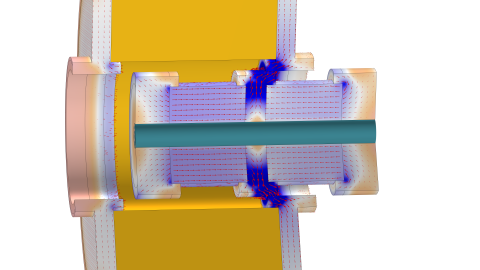
Veryst also offers in-person classes on conducting multiphysics analysis specifically involving the use of COMSOL Multiphysics, including the use of COMSOL Multiphysics to solve problems in the medical device industry. As a COMSOL Certified Consultant, Veryst combines extensive experience with COMSOL Multiphysics and grounded knowledge of mechanics, physics, manufacturing, and computational methods to deliver solutions for a wide range of modeling projects. These classes are led by Dr. Nagi Elabbasi, whose primary area of expertise is modeling and simulation of nonlinear and multiphysics systems.
All classes include theory review and hands-on exercises. The online (web-based) classes can be taken directly from your office, and are made interactive using online exercises and by participating by phone or headset with a microphone. Most of the in-person (classroom-style) training courses are given in our offices in Needham, MA, USA, though some classes are held across the country. Please see below for details.
We are also able to provide customized training classes, tailored to your company’s specific needs. These classes can be held online or in-person either at your office or at Veryst’s offices in Needham, MA. Please contact us if you are interested in learning more about our customized training.
All classes are taught by Veryst engineers. The following are some of our upcoming courses.
Multiphysics Analysis for Medical Devices Using COMSOL
This two-day course will cover the efficient use of COMSOL Multiphysics to solve problems in the medical device industry. It covers modeling challenges specific to medical devices, and several examples including tissue ablation and a cardiovascular application. The class includes technical lectures, hands-on COMSOL examples, and assistance on specific models from course registrants.
New Class! Introduction to MCalibration
This updated, one-hour, web-based class offers an overview of the MCalibration parameter extraction and material model calibration software. This course will review the challenges of defining appropriate material parameters from experimental data (particularly for nonlinear material models), examine how the MCalibration software can be used to analyze experimental data files, and discuss which material models can be calibrated with MCalibration. We will use hands-on exercises to learn how to determine the optimal model parameters for a variety of polymer materials.
Finite Element Modeling of Solid Polymers
(Part 1)
This two-day, web-based course covers a review of polymer mechanics theory, techniques and tools for experimentally characterizing polymers, and hands-on training on how to perform accurate finite element simulations of polymer components.
This is the original training class that we have been giving for a number of years. It provides a great introduction to a large number of topics.
Advanced Structural Mechanics Using COMSOL Multiphysics
This class will cover most of the structural analysis capabilities in COMSOL Multiphysics including large deformations, material models, contact mechanics, and convergence issues. The class includes technical lectures and hands-on COMSOL examples.
Advanced Finite Element Modeling of Solid Polymers (Part 2)
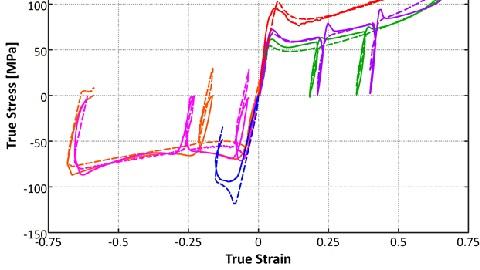
This class is an extension of the original Part 1 class, and covers in more depth the theory of different material models, and hands-on exercises designed to teach how to use the different models to solve real problems.
High Strain Rate Testing and Modeling of Solid Polymers
Foams, elastomers, and other polymers are often exposed to high strain rates and impact events. Due to the strain-rate dependence of these materials it is important to have accurate experimental data in order to select and calibrate a suitable material model. In this class we will demonstrate the use of split Hopkinson-bar tests and traditional uniaxial tests, and also provide hands-on exercises for how to use the experimental data to calibrate suitable material models. All experiments will be performed in the same lab as the class.
Failure Predictions of Rubbers and Thermoplastics Using FEA
Predicting failure of different polymers can be difficult due to material nonlinearities and sensitivity to the load environment. In this class we will discuss different techniques that can be used to predict both brittle and ductile failure, including fatigue, of different types of polymers.