Case Studies

Silicon Nitride Thin Film Elastic Modulus

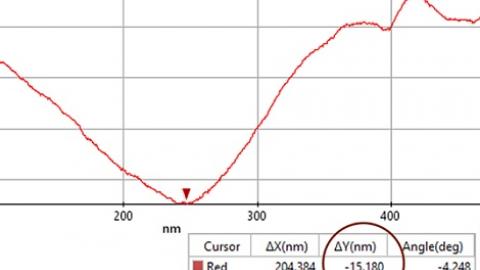
Knowledge of thin film mechanical properties is important for device operation, reliability, and simulation. Veryst measured the elastic modulus of a low stress silicon nitride thin film using nanoindentation and validated the technique with atomic force microscopy.

Simulating Compression Springs in a COMSOL Multiphysics Application

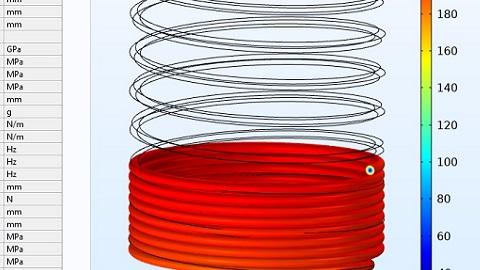
The design of compression springs is tied to their intended function and the acceptable levels of deformation and stress that the spring can withstand. Veryst designed and evaluated a standalone simulation application to capture important qualities, such as spring rate, natural frequencies, and estimated fatigue life, for both helical and conical compression springs.

Simulation of Cavitating Flow in Confined Geometries

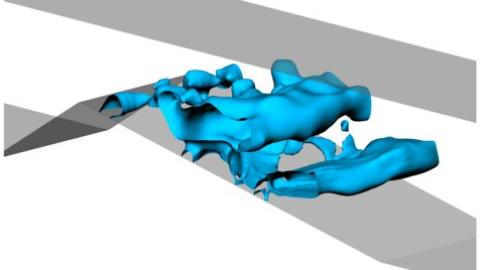
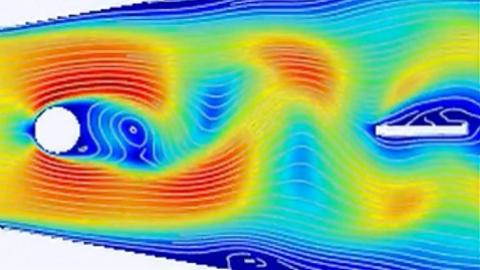
Cavitation, the formation and collapse of vapor bubbles in a liquid due to local pressure drops, can limit performance and reliability in medical devices, energy systems, and process equipment—causing unwanted wear, vibration, and efficiency loss. In this case study, we applied high-fidelity multiphase computational fluid dynamics simulations to capture the unsteady dynamics of cavitation in confined geometries and demonstrate how simulation can guide the development of safer, more efficient, and longer-lasting products and systems.

Simulation of Droplet Formation

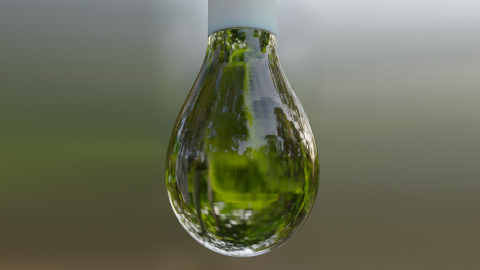
The physics of droplet formation during dripping, jetting, and atomization governs the accuracy and consistency of a wide array of fluid dispensing and spray technologies. In this case study, we apply high-fidelity multiphase flow simulations to capture the full droplet formation cycle and reveal mechanisms that control necking, breakup, and satellite drop formation. The results demonstrate how simulation can guide the design of more precise, efficient, and reliable fluid dispensing and spray technologies.

Simulation of Heat Transfer From Impinging Turbulent Jets

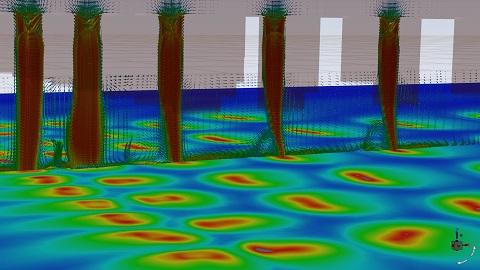
Arrays of impinging fluid jets are an effective design solution for applications requiring large heat transfer rates. This case study demonstrates the ability of computational fluid dynamics (CFD) to predict heat transfer coefficient distributions and guide design choices to improve cooling uniformity.

Simulation of Vial Filling

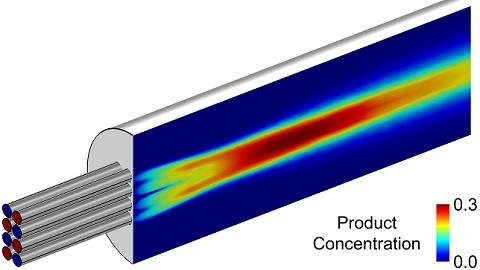
Vial filling—the precise transfer of liquids into vials under controlled conditions—is a common process step in pharmaceutical, diagnostic, and laboratory applications, where product quality and regulatory compliance demand exceptional consistency and reliability. This case study compares two filling strategies using moving and fixed inlet nozzles, demonstrating how controlling the distance between the nozzle and the liquid surface can produce clean fills or, conversely, lead to undesirable outcomes such as dripping, splashing, and air entrainment. These results provide practical guidance for engineers seeking to refine filling protocols, minimize waste, and ensure consistently reliable production.
Simulation Verification of PLLA Stent Implantation

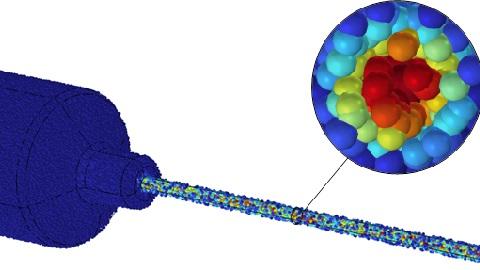
Regulatory agencies such as the US Food and Drug Administration (FDA) require medical device manufacturers to follow rigorous simulation verification procedures to assess credibility of numerical simulations used to support submissions. In this case study, we simulate crimping of a Poly L-lactic Acid (PLLA) stent in the implantation process and demonstrate numerical solution verification.

Small-Scale Friction Measurement

Medical devices, combination products, consumer products, and manufacturing processes often include components that slide past each other. These products and processes can fail when the friction forces between the surfaces are too high, due to surface roughness, lubrication, materials, or environmental conditions. Here Veryst introduces a specialized fixture to measure the friction between a small metal wire and three polymer materials, to select a backup supplier for dual sourcing that would maintain low friction in a medical device.

Soccer Ball Impact Simulation

Some of the most sensational goals in soccer history came from free-kicks and long shots. (Remember Roberto Carlos’ famous 1998 free-kick?) Veryst investigated the effect of friction between ball and boot, the ball’s internal pressure, and ball materials on the ball’s rotational velocity to understand ball/boot interaction.

Can we help? Just want to keep in touch?