Microfluidics & Millifluidics
Multiphysics simulation support for industrial microfluidic and millifluidic device & process development across industries from drug delivery and bioprocessing to consumer products and energy applications.
Getting a microfluidic device right means predicting how fluids, particles, chemicals, and flexible structures behave at a scale where intuition often fails. When a design underperforms, or you’re not sure it will work before you build it, we help you understand the physics and find a path forward.
Our engineers combine analytical models, computational simulation, and hands-on device testing to solve real microfluidics problems. We work with clients across industries including MedTech, pharma, consumer products, and energy, often from early concept through validated, manufacturable prototypes.
Contact us to discuss your microfluidics simulation challenge with our experts.
How Veryst Helps
Microfluidic devices fail in ways a CAD model won’t show you: uneven mixing, clogging, leaks, delamination, or bubbles. Our microfluidics experts find the root cause and give you practical design and manufacturing recommendations.
- Device and process design: Model micropumps, valves, channel networks, and manifolds to predict flow, mixing, and structural performance before prototyping and testing.
- Drug delivery and combination products: Simulate injection devices, needle-free microjets, transdermal patches, and implantable systems to optimize dose delivery and device performance.
- Bioprocessing and biomanufacturing: Improve mixing, particle formation, and drying steps for mRNA vaccines, chromatography, and other lab- and production-scale processes.
- Energy and electrochemical systems: Optimize flow and species transport in batteries, fuel cells, electrolyzers, and micro heat exchangers.
- Core physics expertise: Apply deep knowledge of surface tension, rheology, fluid-structure interaction, and heat transfer to any microfluidic or millifluidic challenge.
Microfluidics and Millifluidics in Industry
- Biomedical Engineering: Microphysiological Systems, Organs-on-a-Chip, and Implantable Devices
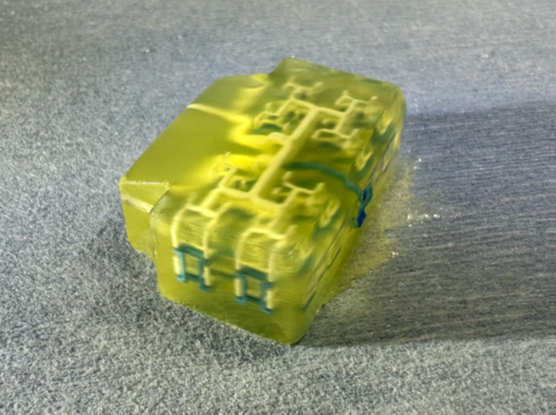
3D-printed implantable liver device. Courtesy 3D BioLabs LLC. Relevant work examples
- Combination Products and MedTech: Drug Delivery and Injection Systems
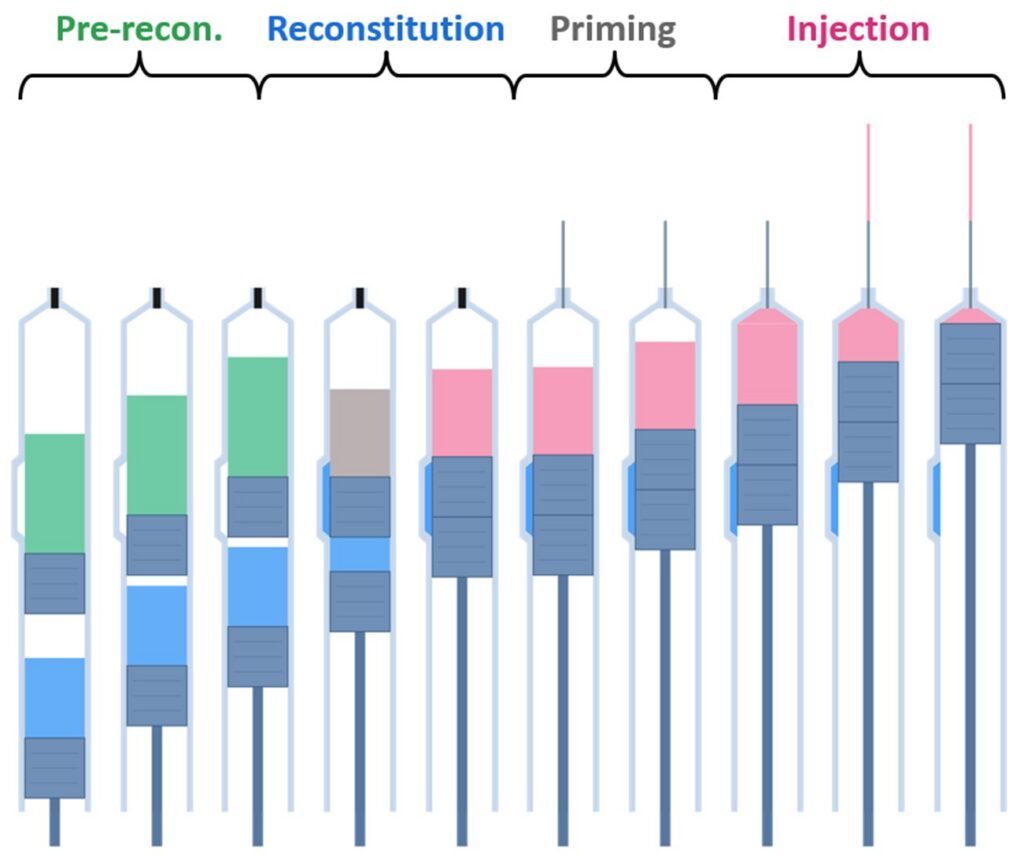
Predicted reconstitution process steps in a dual-chamber autoinjector. Relevant work examples
- Merck & Co.: Dual-Chamber Autoinjector Modeling
- Biora Therapeutics: Breakthrough Smart Pill Development
- Shear Jamming in Dense Suspensions
- Optimizing Subcutaneous Drug Delivery via Multiphysics Simulation
- Optimizing Intravitreal Drug Delivery via Multiphysics Simulation
- Transdermal Drug Delivery
- Transdermal Permeation Enhancers
- Bioprocessing and Chemical Manufacturing
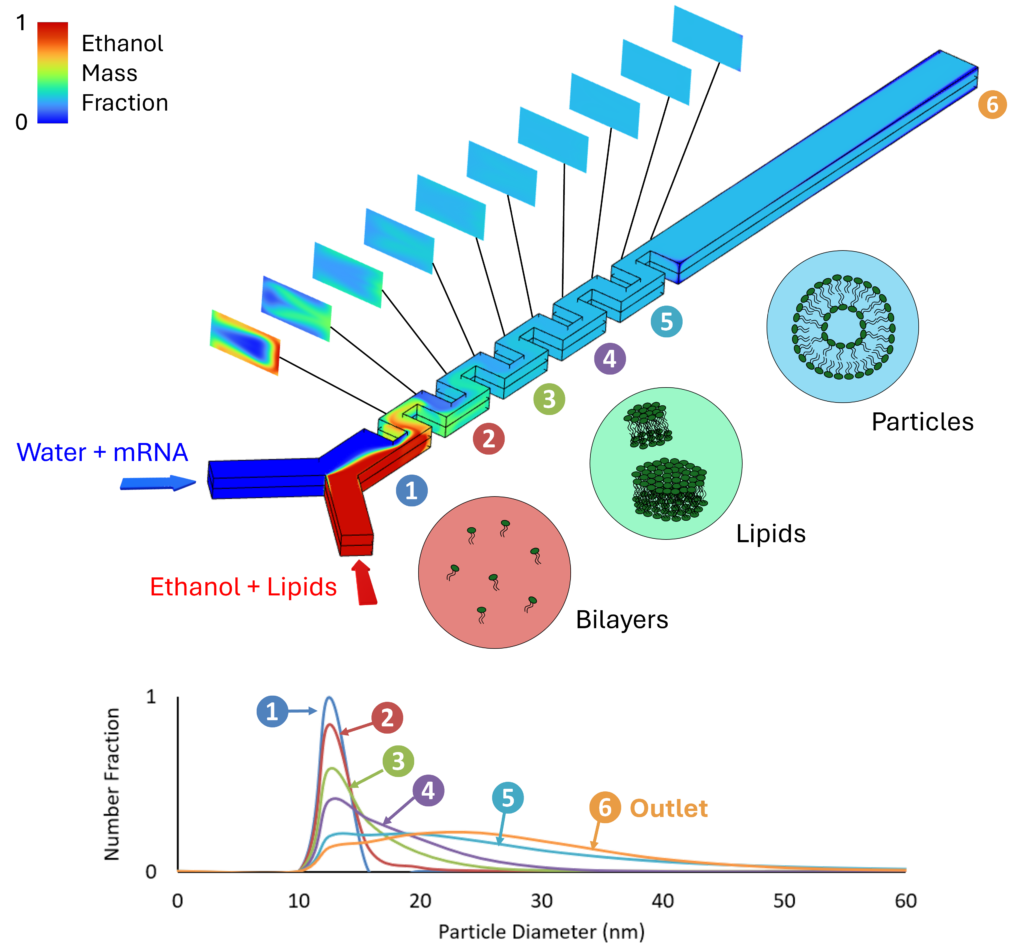
Simulation of lipid nanoparticle (LNP) precipitation in a serpentine microfluidic mixer for lab-scale mRNA vaccine production, and corresponding LNP size-distribution. Relevant work examples
- Energy and Electrochemical Systems
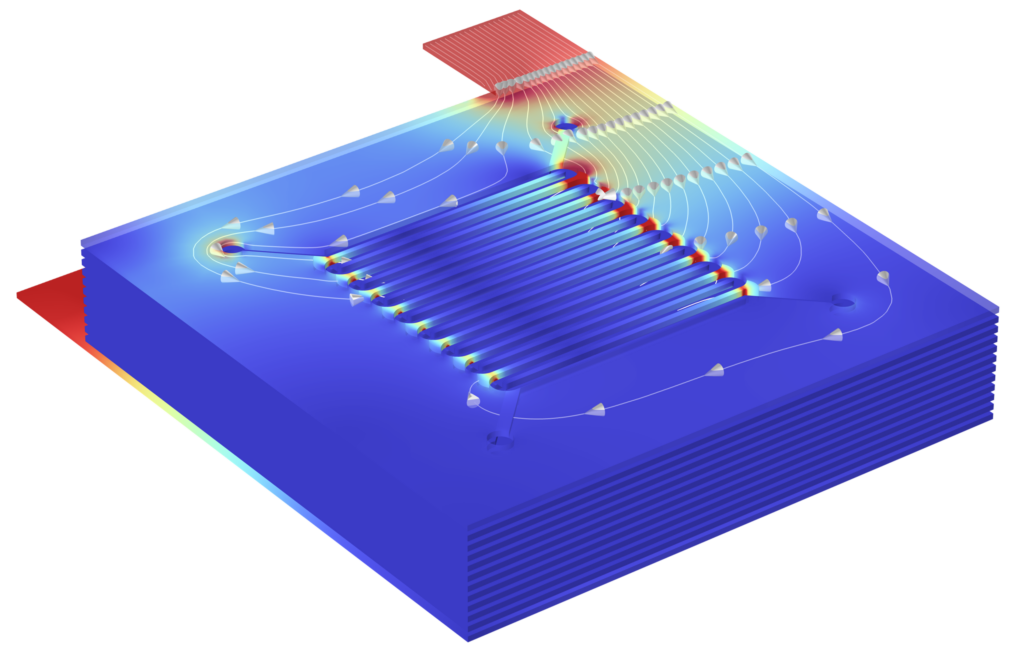
Simulated current density distribution in PEM electrolyzer stack. Relevant work examples
- Microfluidic Devices and Millifluidic Devices
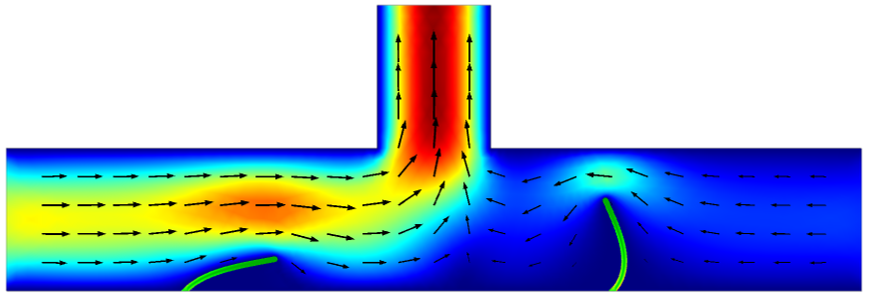
Simulation of a micropump based on tilted flexible flaps. Relevant work examples
- Micropump Mechanism
- Capillary Filling in a Microfluidic Channel
- Chaotic Mixing in Microfluidic Devices
- Active Mixing in a Microwell by Repetitive Pipetting
- Microfluidic Mixer Concentration Profile
- Bubble Entrapment in Microchannels
- Fluid Flow Through Porous Media
- Simulation of Droplet Formation
- Delamination in Microfluidic Valves
- Shear Jamming in Dense Suspensions
Every application on this page draws on the same underlying physics. Here’s a closer look at the core phenomena our engineers model most often.
Core Physics in Microfluidics and Millifluidics
- Mixing in Microfluidic and Millifluidic Devices
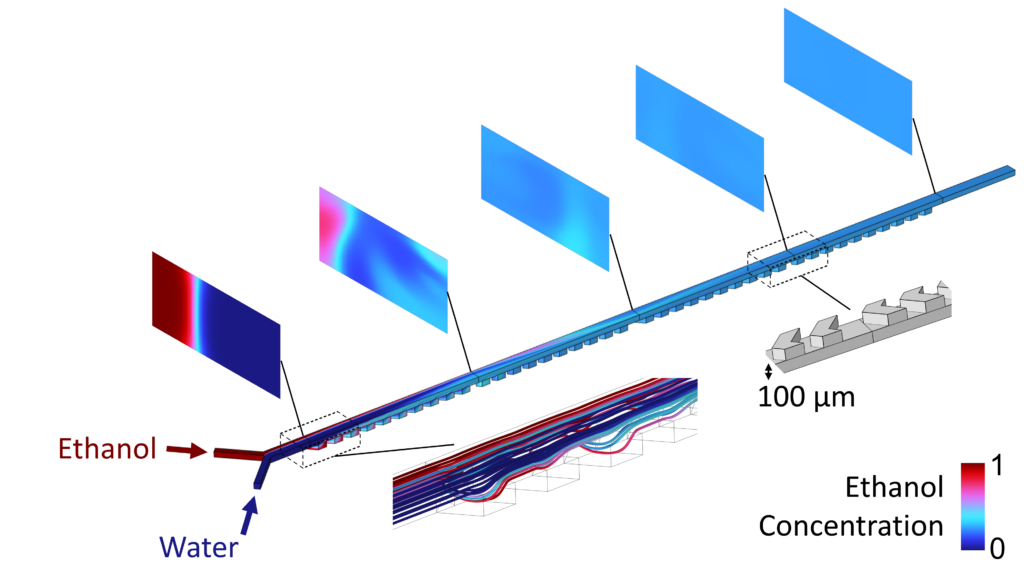
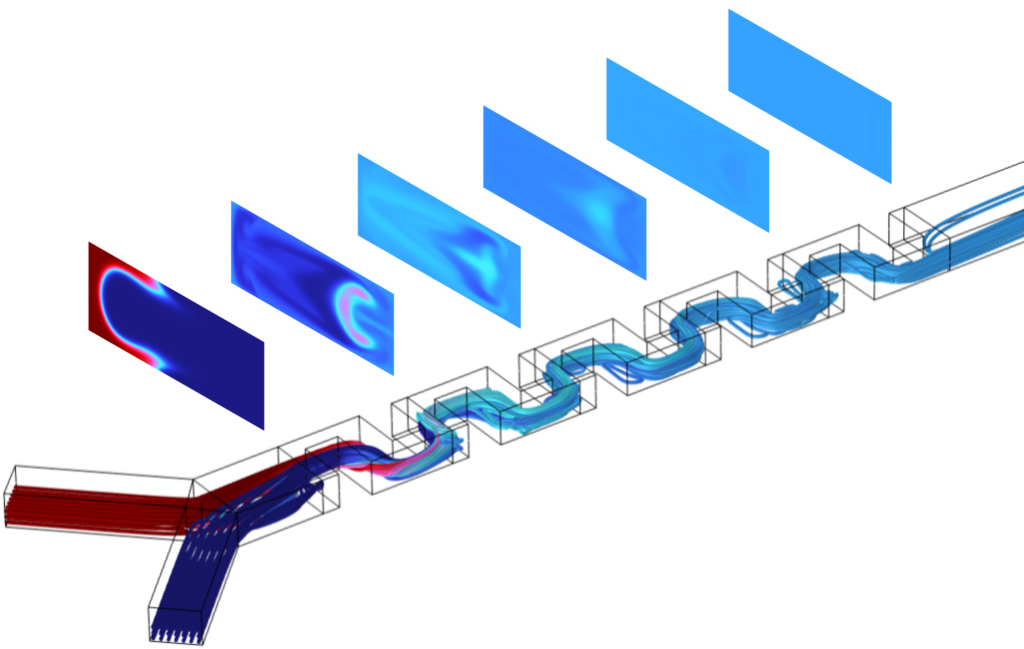
Chaotic mixing in a microfluidic serpentine mixer. Relevant work examples
- Microfluidic and Millifluidic Heat Transfer and Exchange
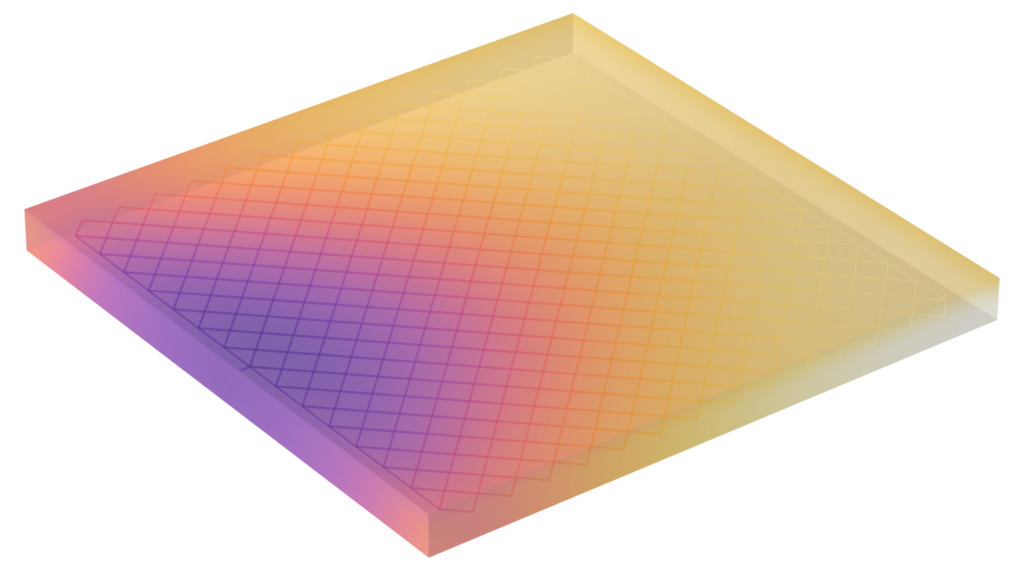
Predicted temperature in a micro heat exchanger Relevant work examples
- Capillary Flow, Surface Tension & Wetting
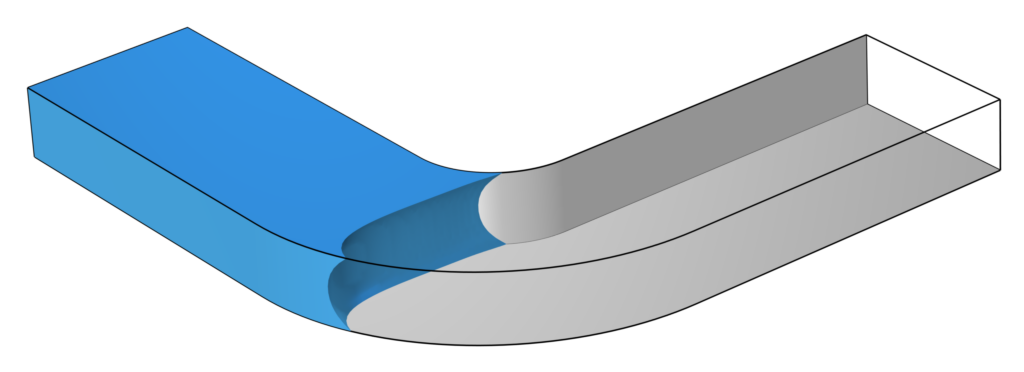
Multiphase flow simulation of capillary filling in a microchannel. Relevant work examples
- Fluid-Structure Interaction
Simulation of a micropump based on tilted flexible flaps. Relevant work examples
- Rheology of Complex Fluids in Microfluidics
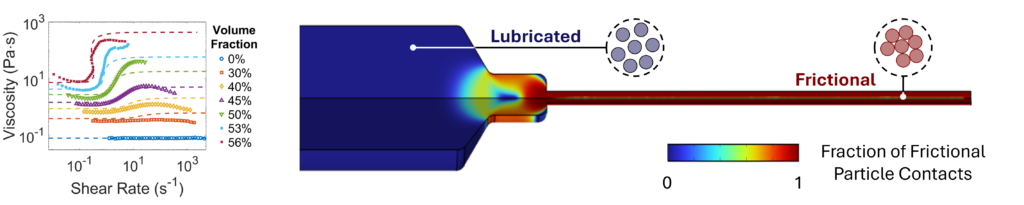
Jamming of a dense suspension in a syringe needle. Relevant work examples
- Electrochemistry in Microfluidics and Millifluidics
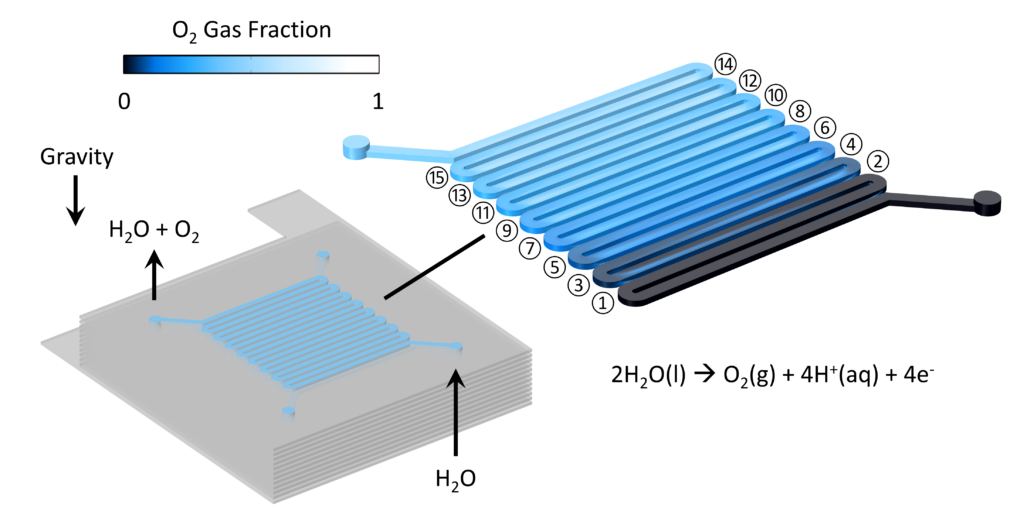
Simulated oxygen gas distribution in the anodic flow channels resulting from water electrolysis. Relevant work examples
Intellectual Property
Veryst prioritizes client confidentiality, so most of our work stays private. In select cases, client-focused work is disclosed through journal publications or patents. A few examples relevant to microfluidics and multiphysics device design include:
- US 12,351,827 B2 — Systems and methods fabricating a microchannel vascular network device and seeding a microchannel (3D BioLabs LLC)
- US 10,754,145 B1 — Apparatuses, systems, and methods for adjusting fluid lenses (Meta Platforms Technologies LLC)
- US 11,330,851 B2 — Apparel thermoregulatory system (Nike Inc.)
Contact us to discuss your microfluidics simulation challenge with our experts.
Frequently Asked Questions
- What microfluidics simulation services does Veryst provide?
Veryst’s microfluidics experts model flow, mixing, chemical & particle transport, and structural performance in microfluidic and millifluidic devices. Veryst pairs this microfluidics simulation with device test data to ensure real-world performance.
- What industries does Veryst's microfluidics team work in?
Veryst applies microfluidics modeling & simulation across pharma, MedTech, consumer products, and energy systems. See the application areas throughout this page for specific case studies.
- Can Veryst help with microfluidics problems coupled to other physics, like heat transfer or electrochemistry?
Yes. Veryst’s microfluidics experts regularly combine microfluidics simulation with heat transfer, fluid-structure interaction, and electrochemistry, as shown in the micro heat exchanger and PEM electrolyzer examples on this page. Veryst selects the modeling approach that fits each coupled problem.
- What software does Veryst use for microfluidics simulation?
Veryst primarily uses COMSOL Multiphysics for coupled microfluidics problems, selecting the modeling approach suited to each device’s physics. Veryst validates simulation results against client-supplied data, published literature, or targeted product testing when needed.
- How do I get started with Veryst's microfluidics simulation services?
Veryst starts with a scoping discussion about the engineering challenge, goals, and timeline, then writes a custom proposal. Contact us to start that conversation.
We Don’t Just Deliver Solutions; We Explain the "Why" Behind Them
Browse our library of webinars, whitepapers, and blogs to learn more from our experts on advanced simulations, material modeling, and physical model validations.
Related Case Stories
Put Our Experts to the Test
Our team of scientists and engineers is ready to help you de-risk unproven technologies, explain complex material behavior, and solve your toughest product challenges.
Fractional R&D for the World’s Most Ambitious Brands
Veryst is the premier product engineering consulting firm for companies that need the highest level of confidence that their products will work in the real world.